The Story⚡
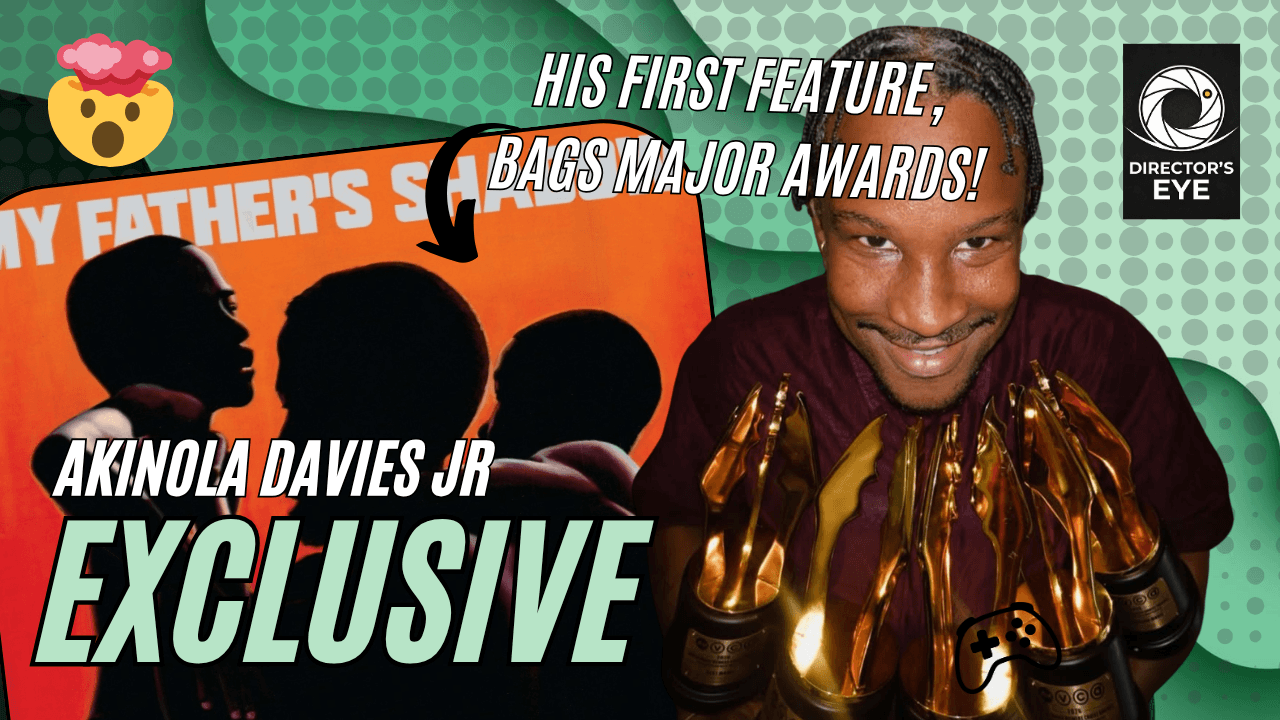
BAFTA-winning director Akinola Davies Jr. sits down for an in-depth conversation about the journey of My Father’s Shadow, from its unlikely beginnings to its major wins and bold choices.
Tell Me More
Shock Africa has released the debut episode of Director’s Eye, its monthly long-form filmmaker interview series. The opening episode features an exclusive interview with BAFTA-winning writer-director Akinola Davies Jr. of the acclaimed film My Father’s Shadow.
Hosted by Shock Africa co-founder and editorial director Akintunde Damilare, the conversation traces the full journey of the film: from its start as an arthouse project funded almost entirely by UK financiers, to becoming the first Nigerian film selected for official competition at Cannes, sweeping five awards at the AMVCAs, and its selection as the UK entry for the Academy Awards. It offers the most complete account Davies Jr. has given of the decisions behind the film and arrives as My Father’s Shadow returns to Nigerian cinemas for a second theatrical run, created to give local audiences more time with the work.
From the Bottom of Every Prediction to Five AMVCAs
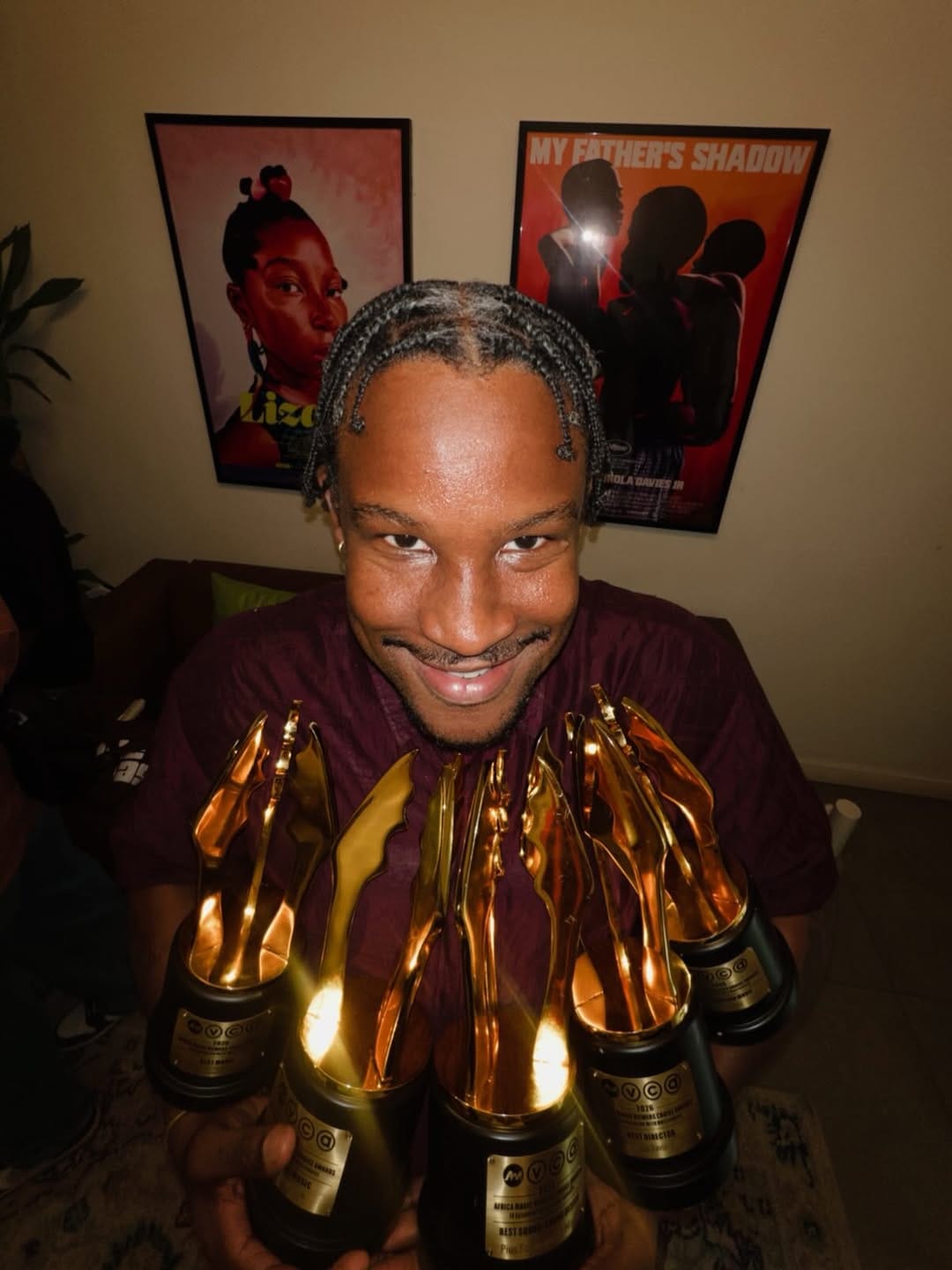
When the AMVCA nominations were announced, Davies Jr. was travelling in Brazil. He returned to messages about a heated conversation on Nigerian Twitter, with some strongly supporting the film and others unaware of it. He checked prediction lists and found My Father’s Shadow ranked last in every category it was nominated for. “We were at the bottom of every prediction in every category,” he recalls. “So I realistically was just happy to be nominated alongside incredible filmmakers in Nigeria.”The film went on to win five awards. He collected them in person for the first time during the Lagos re-release and described the moment as emotional. He repeatedly credits the entire crew, many based in Nigeria who have never left the country, and pushes back against the industry habit of centring success on the director alone.
Nigeria or the UK: The Oscar Entry Decision Explained
The choice to submit My Father’s Shadow as the UK entry for the Oscars, rather than Nigeria’s, sparked the most discussion. Davies Jr. explains that almost all financing came from the UK, with an Irish co-production partner involved, and that it would have felt disingenuous to turn away from those supporters once the film gained attention. The team had originally expected a Nigerian submission, but BAFTA made a strong and deliberate effort to secure the film.
Beyond finances, he sees the process as important learning. As first-time filmmakers navigating the UK campaign, they gained direct insight into how Academy submissions and campaigns work, including costs for US screenings and what it takes to position an African film seriously. “We can feed back information on how those campaigns are run,” he says. That knowledge now belongs to Nigerian cinema.
Making My Father’s Shadow: Mainland Lagos, Film Stock, and a Whale
Davies Jr., who grew up on the Lagos mainland, shot the film almost entirely there, focusing on parts of the city that rarely appear on screen. The production had five weeks of preparation and a six-week shoot on film stock, which naturally slowed the pace and required more considered decisions across departments.
He describes a production approach that treated crew members as artists with proper time and resources, paying overtime, holding extensive rehearsals, and giving costume, sound, and production design the space typical Nollywood schedules often cannot. This helped the film feel more substantial than its budget suggested, as money went further in Nigeria. The most challenging sequence was the whale on the beach, which combined practical elements like boats to block sightlines and a physical fin with CG work. The team had almost no useful visual references.
Nigerian Financing, the Next Film, and the Afrobeats Challenge
Davies Jr. openly notes that Nigerian financiers passed on the project when pitched as an arthouse film. He holds no bitterness. With the film’s achievements now established, the team is ready to collaborate with Nigerian funding on the next project. What matters most to him is working with financiers, local or international, who share real ambition for Nigerian cinema.
He ends with a broader point that runs through the interview: Nigerian cinema has the storytelling strength, cultural depth, and global audience to achieve what Afrobeats has done internationally. “Afrobeats has done what it’s done. Why can’t Nigerian cinema do that?” he asks. “That’s not even just with us. That’s for everyone, our journalists, our critics, our actors, our crews, our publishing, our PR.”
Watch Full Interview Here
In Summary
The full interview with Akinola Davies Jr. offers a detailed, firsthand account of My Father’s Shadow and its place in Nigerian film history. Watch the episode now on the Shock Africa YouTube channel and subscribe to receive notifications when new episodes are released.
Thanks for Reading.
Shockng.com covers the big creators and players in the African film/TV industry and how they do business.
Let’s be friends on Instagram @Shockafrica