The Story⚡
Seven films did something no one saw coming this year. Each claimed a first, a peak, or a threshold no one had cleared before. Their combined runs show exactly what brought people into cinemas in 2026.

Tell Me More
Nigeria’s cinemas are on track to finish the year past ₦20 billion. The titles that drove the market forward did so by setting specific records: the highest overall gross, the largest opening weekend, the strongest single-day start, the highest for an indigenous-language film, the biggest Easter frame, and multiple ₦100-million thresholds. The pattern is clear in the details of each release.
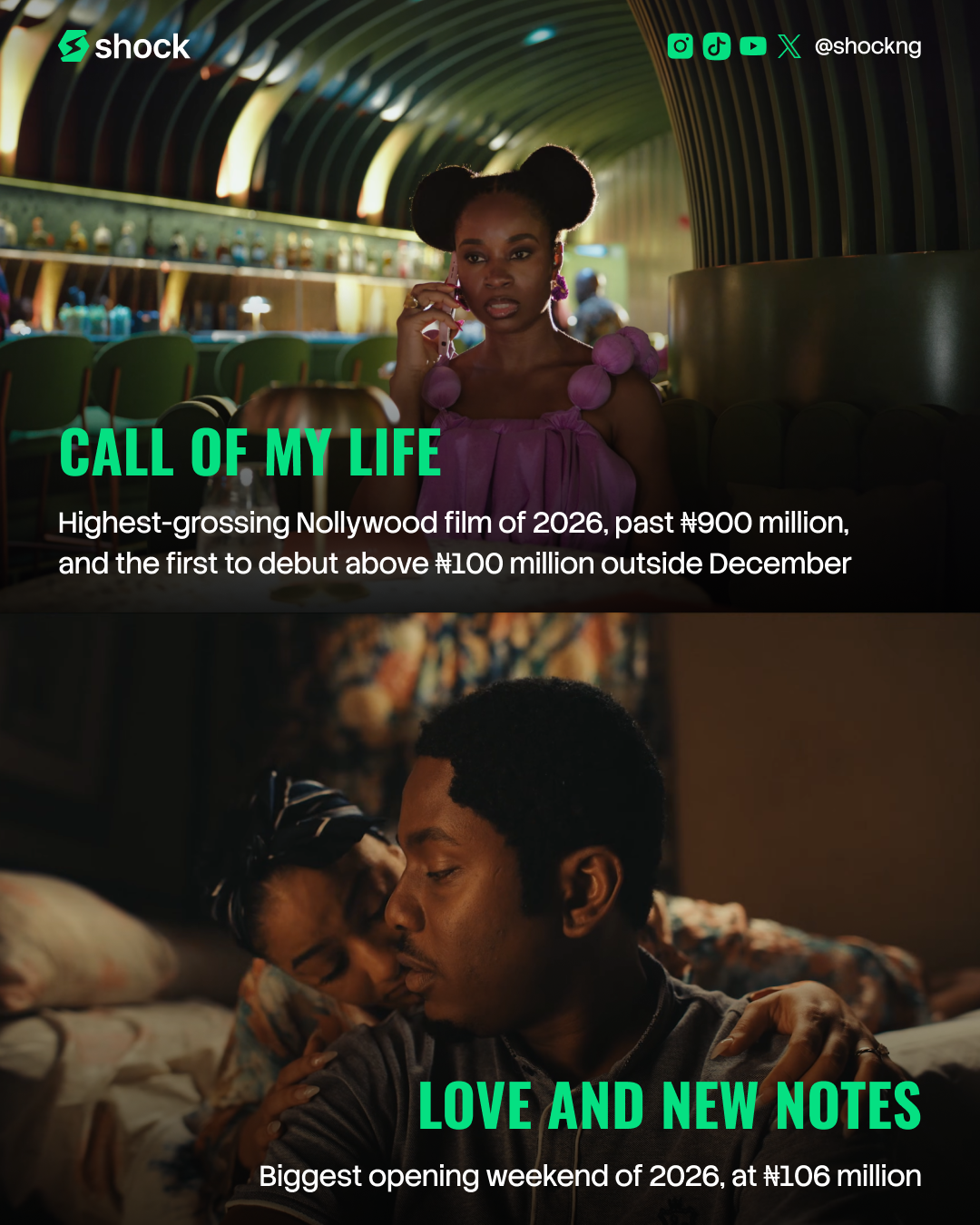
Call of My Life
Released on 15 May and directed by Dammy Twitch from a screenplay by Uzoamaka Power, the romantic comedy finished as the highest-grossing Nollywood film of 2026 at ₦902.3 million. It became the first title released outside December to cross ₦600 million and held the number-one position across multiple consecutive weekends in 2026. Distributed by FilmOne, the film starred Uzoamaka Power and Andrew Yaw Bunting and became one of the stronger mid-year performers in recent theatrical history.
Love and New Notes
Timini Egbuson’s production, directed by Kayode Kasum and released on 13 February, recorded the biggest opening weekend of 2026 at ₦106 million. That figure also marked the highest single-day gross for any 2026 release and made it the first Nollywood film to open above ₦100 million outside the December window. Set against the 1984 currency change, the film went on to a full theatrical total of ₦400.17 million across a 15-week run.
Agbara Nla: The Return
The Mount Zion faith-based remake, directed by Damilola and Joshua Mike-Bamiloye and released on 1 October, posted the biggest first-day gross for a Nollywood film with ₦70 million (12,134 admissions) from preview screenings. Its opening frame reached ₦170.6 million. By early November, the cumulative total stood at ₦462.2 million, moving it past The Wedding Party’s ₦452.3 million and into the all-time Nollywood top ten. Distributed by Nile Entertainment, it also became the highest-grossing faith-based title on record and the strongest October release in Nigerian cinema history.
Ikenga: The Last Festival
Directed by Darlington Obodo Kelechi and released on 21 August, the Igbo-language cultural drama opened to ₦22 million in its first three days: the strongest opening weekend for an Igbo film in West Africa. It crossed ₦75 million to become the highest-grossing Igbo film of all time and later reached ₦103.4 million. The production, featuring Pete Edochie, Nkem Owoh, Kanayo O. Kanayo, Patience Ozokwor and others, held the national number-one position among Nollywood titles for three consecutive weeks.

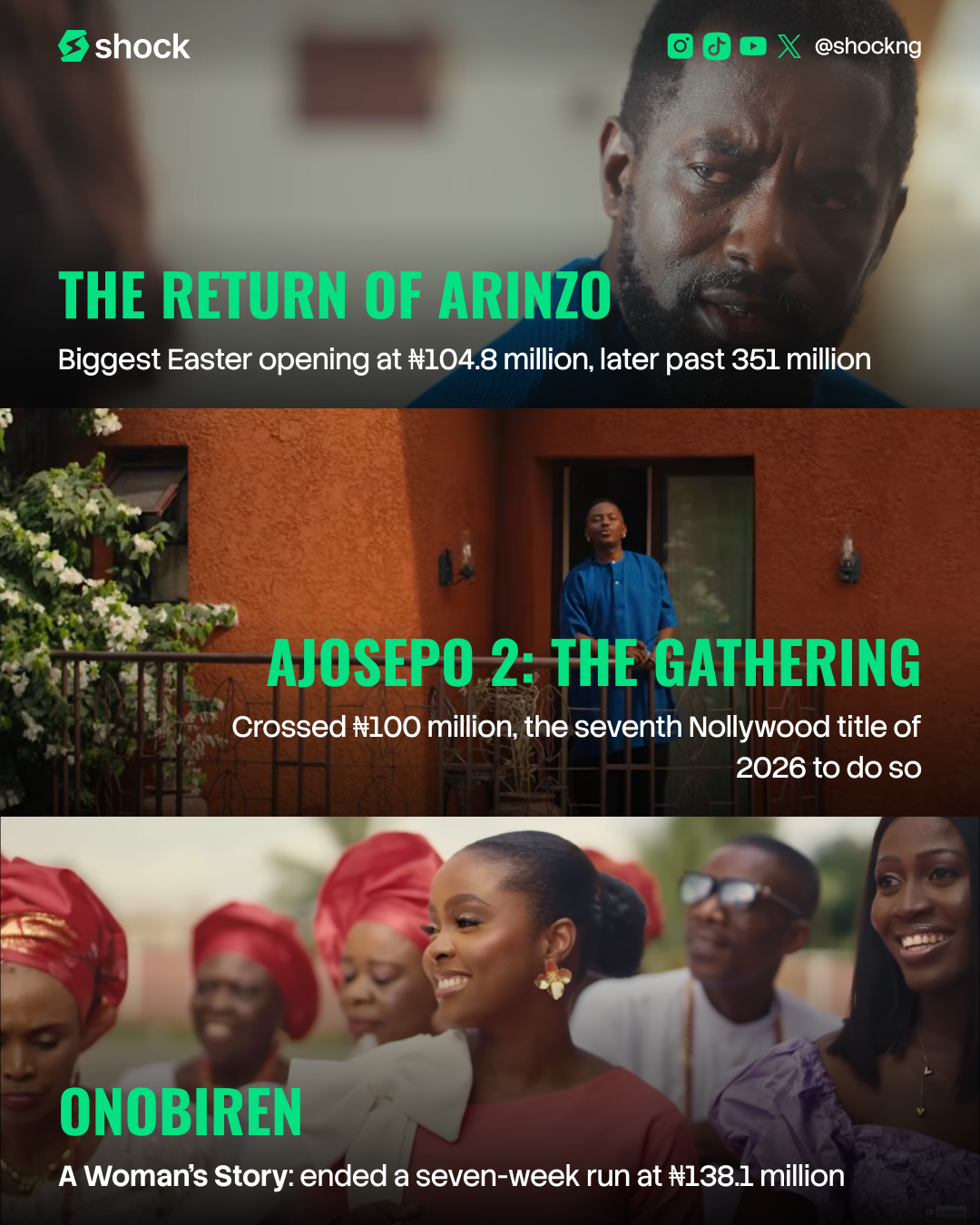
The Return of Arinzo
Iyabo Ojo’s directorial debut, released on 3 April, delivered the biggest Easter opening of the year at ₦104.8 million. The political action sequel went on to a final theatrical total of ₦351.15 million. It held the top weekend spot for two consecutive frames and expanded into additional West African territories and limited international markets.
Ajosepo 2: The Gathering
Released on 28 May and directed by Kayode Kasum, the sequel opened to ₦49.1 million in its first weekend. It later crossed ₦101.4 million, becoming the seventh Nollywood title of 2026 to reach the ₦100 million mark. Subsequent reports placed its cumulative figure at ₦144 million before it left the weekly top five.
Onobiren: A Woman’s Story
Written and executive-produced by Laju Iren, directed by Famous Odion Iraoya and released in early March, the drama completed a seven-week theatrical run at ₦138.1 million. It crossed ₦100 million within three weeks, held the number-one position in West Africa for two consecutive weeks, and ranked as the highest-grossing March 2026 release. The film also recorded the highest gross for a title centred on women and the highest for a South-South production that year.
In Summary
These seven titles account for the clearest records of 2026: the highest overall gross, the largest opening weekend, the strongest first-day result, the top indigenous-language total, the biggest Easter frame, and multiple ₦100-million clearances. Their results show that audiences responded to stories released across the calendar, not only in the traditional December window.
As the industry moves into the festive season and looks toward 2027, the pattern suggests greater confidence in mid-year releases, indigenous-language projects and faith-based titles, alongside continued pressure on distributors and exhibitors to sustain week-to-week performance rather than rely solely on opening spikes.

Thanks for Reading.
Shockng.com covers the big creators and players in the African film/TV industry and how they do business.
Let’s be friends on Instagram @Shockng