The Story⚡
A film shot on almost nothing in 2013 has just been taken into one of the world’s major film archives.
Tell Me More
On November 18, Kenneth Gyang stood in the Capitole Cinema in Lausanne for the first public screening of Confusion Na Wa since the Cinémathèque suisse acquired it for its collection, with support from Les Ami(e)s de la Cinémathèque. By its own description, the Cinémathèque suisse is among the ten most important film archives in the world.
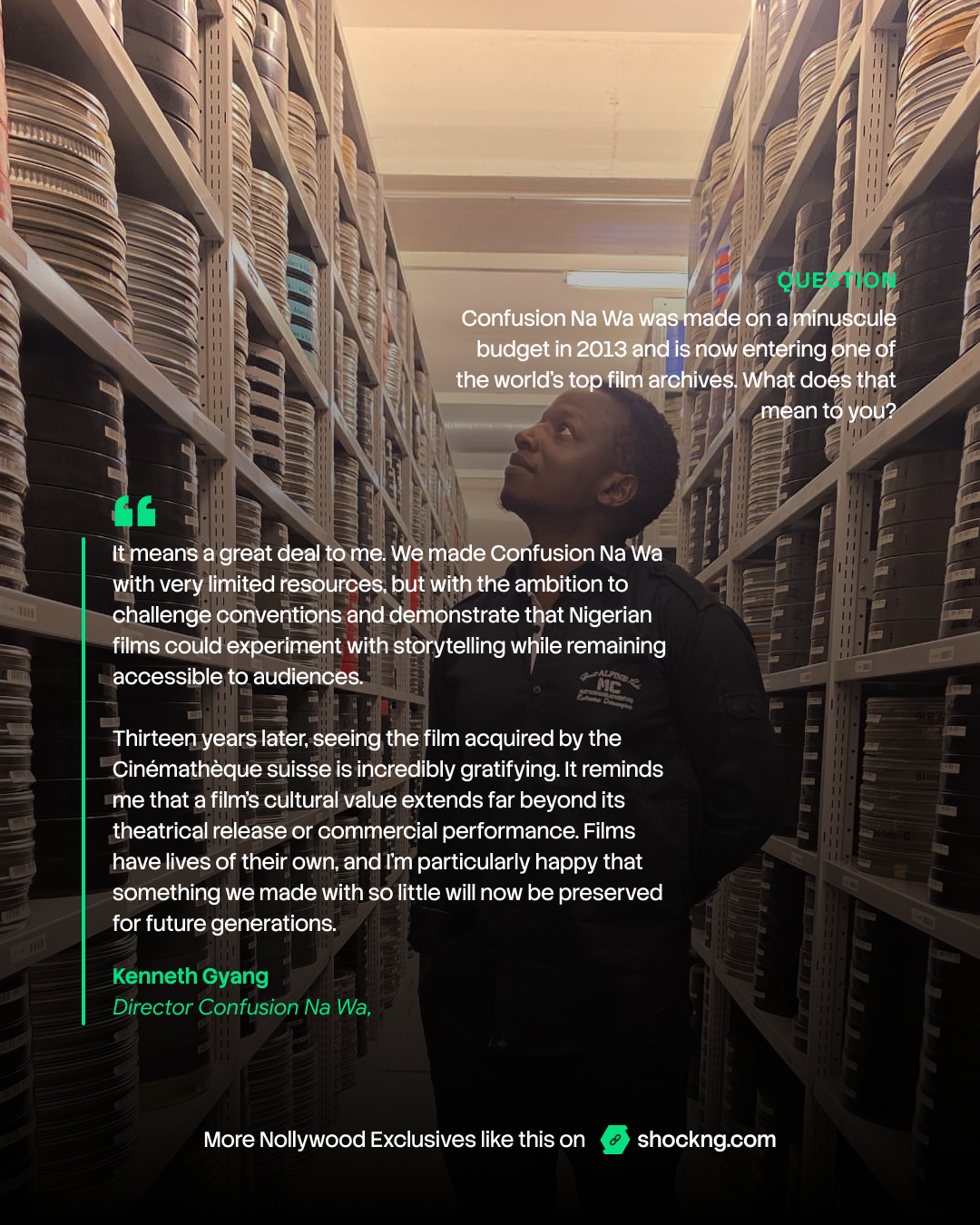
Kenneth Gyang has said the acquisition of Confusion Na Wa by the Cinémathèque suisse means a great deal to him. The film was produced with very limited resources yet carried the clear ambition to test new ways of telling stories while still speaking to Nigerian audiences. Thirteen years later, its place in a serious European archive confirms that a film’s cultural life continues long after its theatrical run or commercial results. He noted with satisfaction that something made with so little will now be kept for people who have not yet been born.
Looking Back at the Younger Filmmaker
Revisiting the film on the large screen of Lausanne’s Capitole Cinema, Gyang found himself valuing its rough edges more than he once did. He was struck by the energy of the performances, Yinka Edwards’ cinematography, and the narrative ambition of the piece. He acknowledged that he has grown as a director and would handle certain choices differently today, yet he still recognises the fearlessness of the younger filmmaker who made it. What continues to interest him is how the film’s examination of moral contradictions, ordinary human behaviour and everyday absurdity still feels current.
Kenneth Gyang Reflects
For Gyang, the acquisition carries deep personal weight. “We made Confusion Na Wa with very limited resources, but with the ambition to challenge conventions and show that Nigerian films could experiment with storytelling while remaining accessible,” he says. “Thirteen years later, seeing it enter the Cinémathèque suisse is incredibly gratifying. It reminds me that a film’s cultural value extends far beyond its theatrical release or commercial performance. Films have lives of their own, and I am particularly happy that something we made with so little will now be preserved for future generations.”
Watching the film again on the large screen of the Capitole, he finds new appreciation for its energy, the performances, Yinka Edwards’ cinematography and the storytelling ambition of that earlier version of himself. “I appreciate its imperfections much more now,” he notes. “Of course I have grown as a filmmaker and would approach certain things differently today. But I also recognise the fearlessness of that younger filmmaker. What fascinates me is how relevant the film’s exploration of moral contradictions, human behaviour and the absurdity of everyday life remains.”
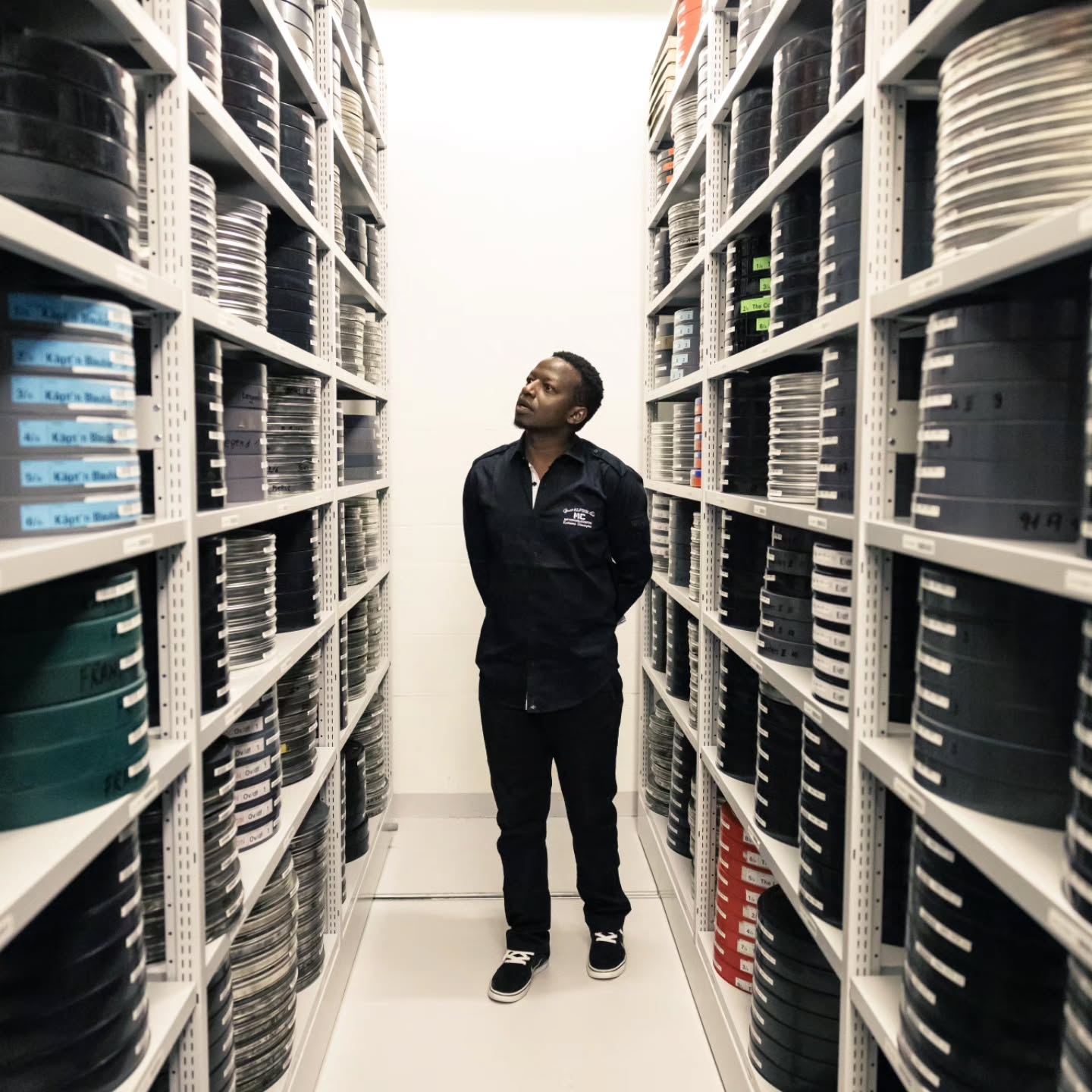
Looking at the wider industry, Gyang is clear about what still needs to be built at home. “Preservation is one of the most neglected conversations in Nigerian cinema. We celebrate how many films we produce, but we rarely ask where those films will be fifty years from now. We urgently need a properly funded national audiovisual archive with professional storage, secure digital backups, restoration facilities, rights documentation, and systems that allow future generations to access these works.
The National Film Archive in Jos exists but remains heavily underfunded. Preservation should begin during production, not decades after release. Our films document our languages, cities, cultures, and social history. If we fail to preserve them, we risk losing an important part of our collective memory. We have built one of the world’s most prolific film industries. Now we must build the institutions that will preserve its legacy.”
What Nollywood Still Needs to Build
Gyang has described preservation as one of the most neglected subjects in Nigerian cinema. The industry celebrates the volume of films it produces but rarely asks where those films will be half a century from now. He has called for a properly funded national audiovisual archive equipped with professional storage, secure digital backups, restoration capacity, clear rights records, and systems that allow future access.
The National Film Archive in Jos exists, yet it remains heavily underfunded. Preservation, he argued, should begin during production rather than decades later. Nigerian films record languages, cities, social habits and history; without deliberate care, an important part of collective memory simply disappears. Having built one of the world’s most prolific film industries, the country now needs the institutions that will protect its output.
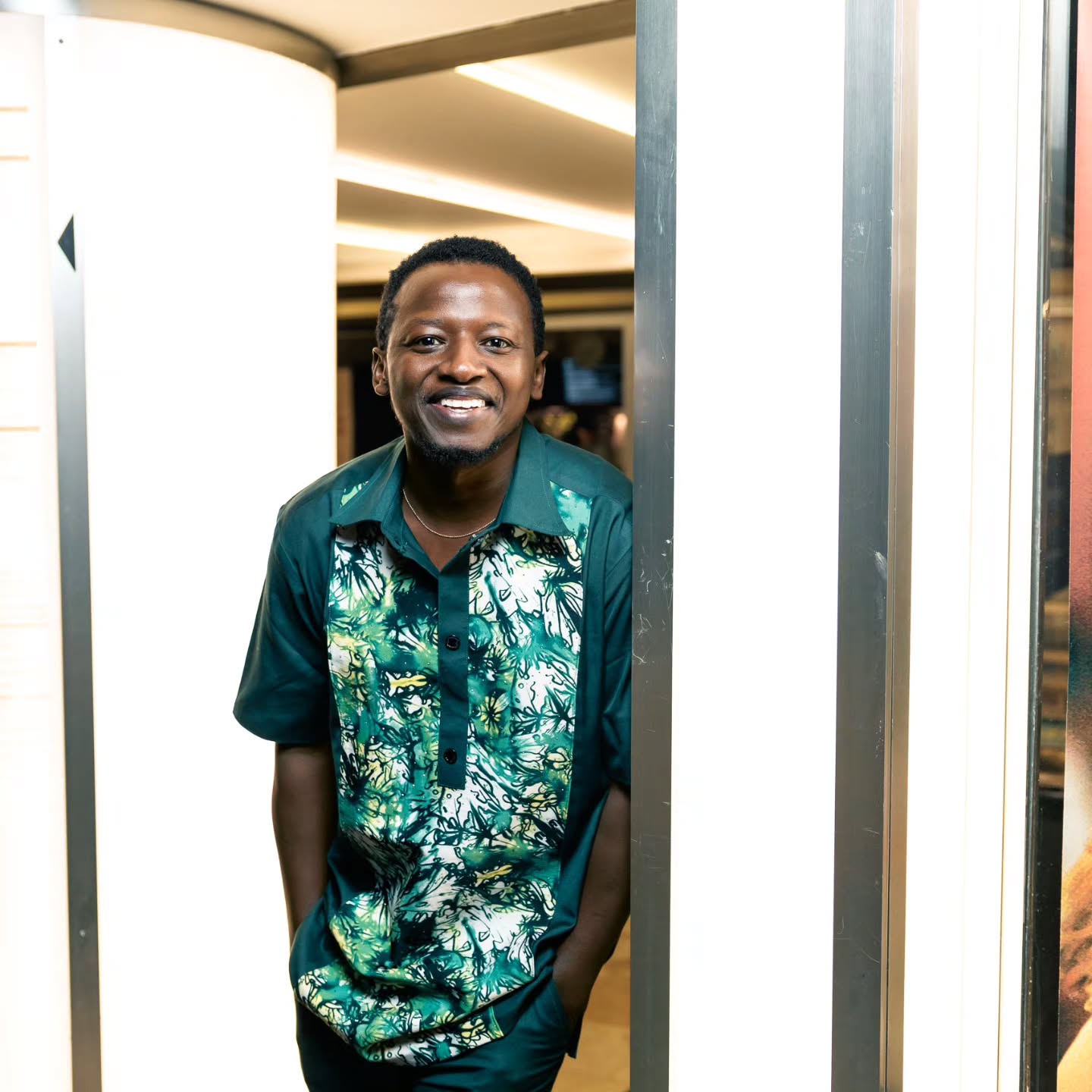
Kenneth Gyang’s Filmography
Gyang’s body of work stretches from early features to major streaming projects.
Early work: the short Mummy Lagos and the documentary Omule, which won Best Documentary at the first Nigerian Students International Film Festival in 2006. He also directed Wetin Dey, a TV drama for the BBC World Service Trust. His work on SoundCity’s Finding Aisha won him Screen Producer of the Year at The Future Awards.
Blood and Henna (2012): a political love story and his first feature.
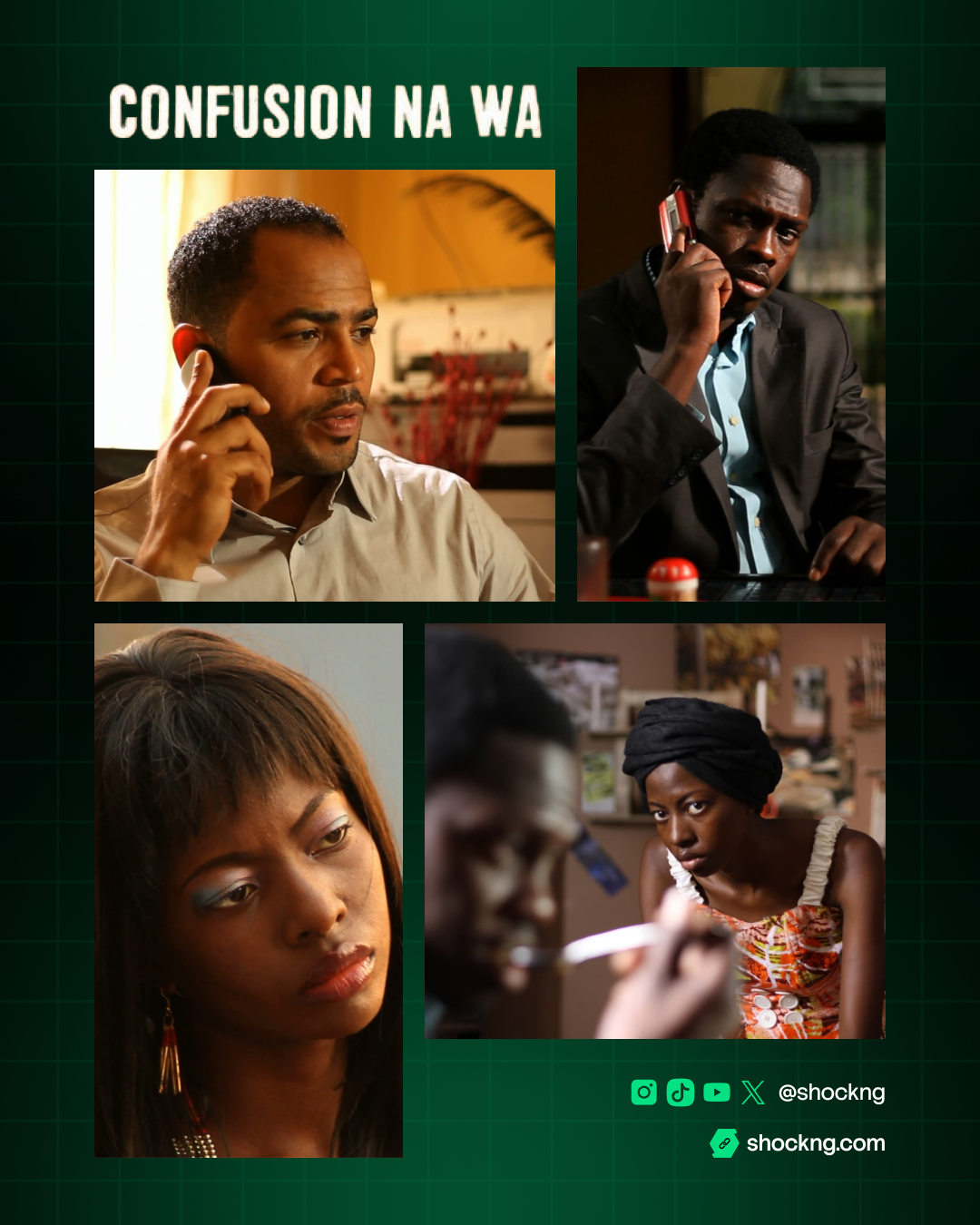
Confusion Na Wa (2013): his debut with Cinema Kpatakpata, the production company he co-founded. It was among the first Nigerian films bought by Netflix.
Sons of the Caliphate (TV series, 2016–2018). His credits also include the short Halima’s Choice (2023).
The Lost Café (2017/2018): a Nigerian-Norwegian co-production that later reached Netflix. It won the Audience Choice Award at AFRIFF in 2017 and the Golden Palm for Narrative Feature at the Mexico International Film Festival.
Castle & Castle (series, 2018).
Òlòtūré (2019): produced by EbonyLife Films. It premiered at the Carthage Film Festival, then became a breakout Netflix title from Nigeria.
Blood Sisters (2022): a crime thriller series co-directed with the late Biyi Bandele. The Netflix series Far From Home followed in 2022.
This Is Lagos (2023): both debuted at the 12th AFRIFF. Both were later official selections at the 2024 Pan African Film Festival. He made the two films back-to-back.
Òlòtūré: The Journey (2024). This series continues the Òlòtūré story.
Tangent
The same neglect that Gyang identifies extends beyond feature films. Large numbers of older NTA programmes, soap operas, news footage and documentaries exist only on deteriorating tape or have already been lost through reuse, poor storage or simple institutional indifference. Over 50,000 Nigerian film titles are estimated to be at risk. Without systematic digitisation, climate-controlled storage and sustained funding, both the commercial cinema of the past three decades and the earlier television record of Nigerian life will continue to fade.
In Summary
Confusion Na Wa moving into the Cinémathèque suisse is a concrete reminder that films outlive their makers and their first audiences. The real test for Nigerian cinema is whether the industry and the state will create the permanent systems that keep those films, and the many others still unprotected, available for the generations that follow.
Thanks for Reading.
Shockng.com covers the big creators and players in the African film/TV industry and how they do business.
Let’s be friends on Instagram @Shockng