The Story⚡
The 12th Africa Magic Viewers’ Choice Awards have come and gone, leaving behind strong opinions on My Father’s Shadow’s dominance and deeper questions about how Nollywood awards truly serve the industry. Shock Africa’s special discussion brings together sharp minds to examine what the results reveal.
Tell Me More
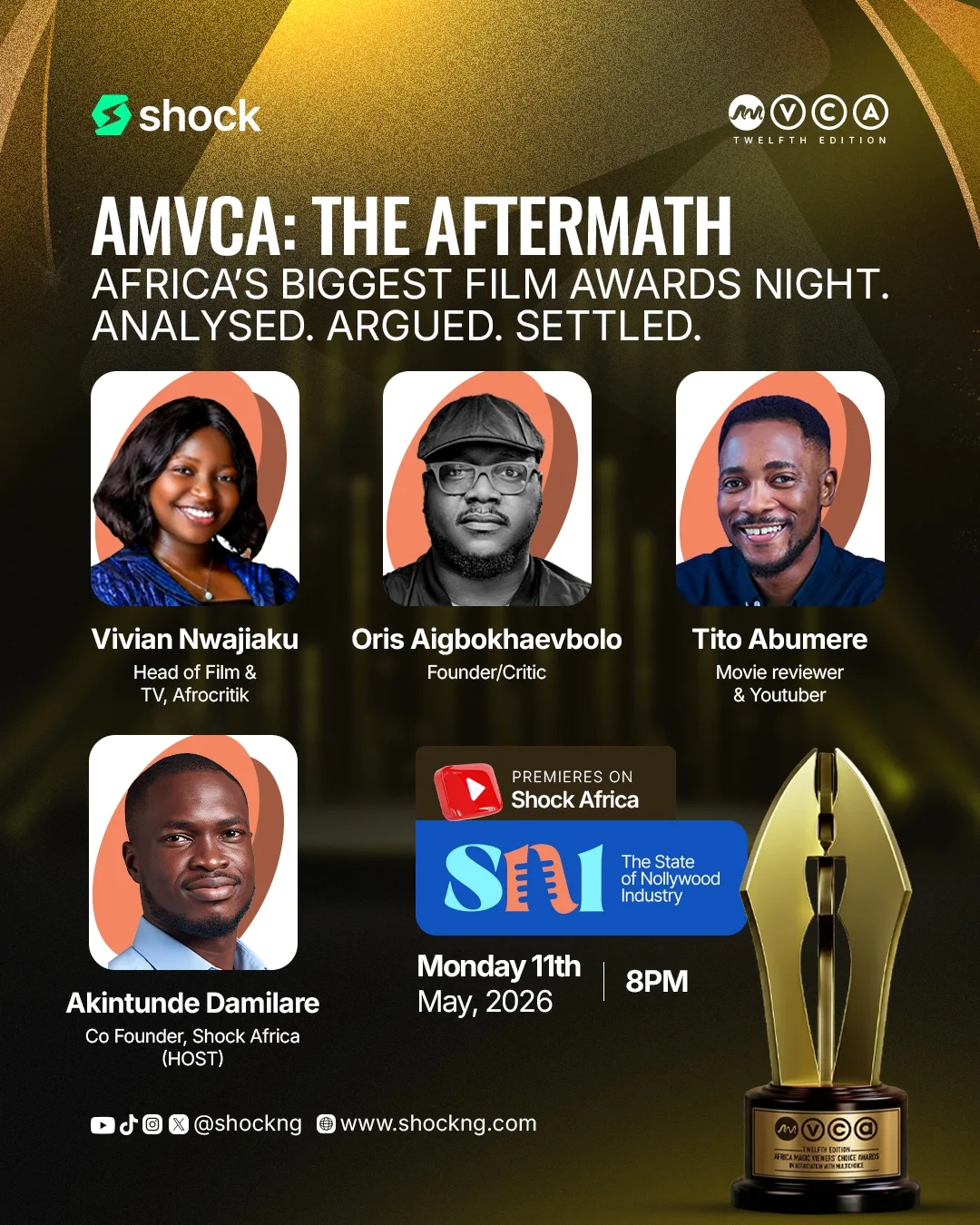
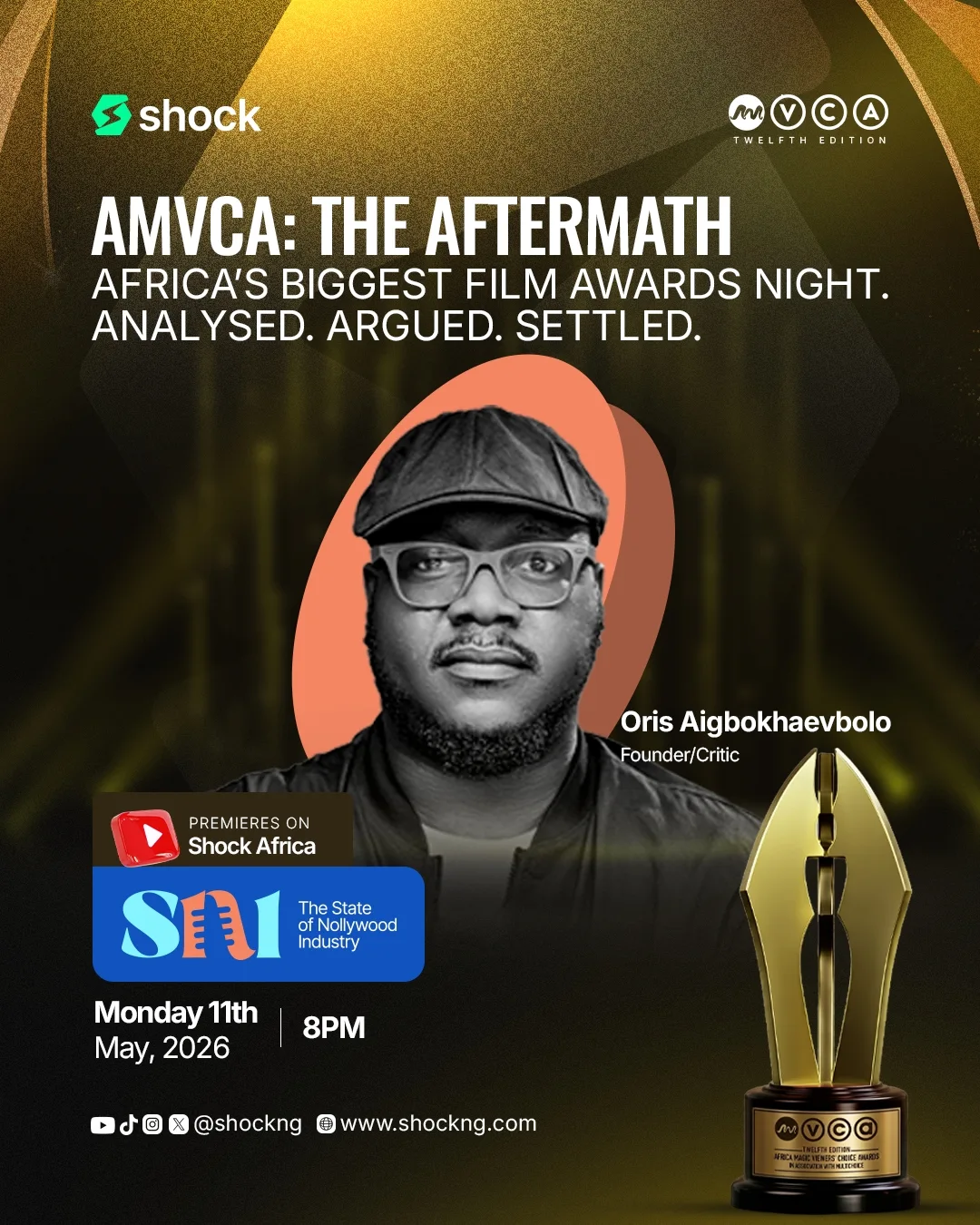
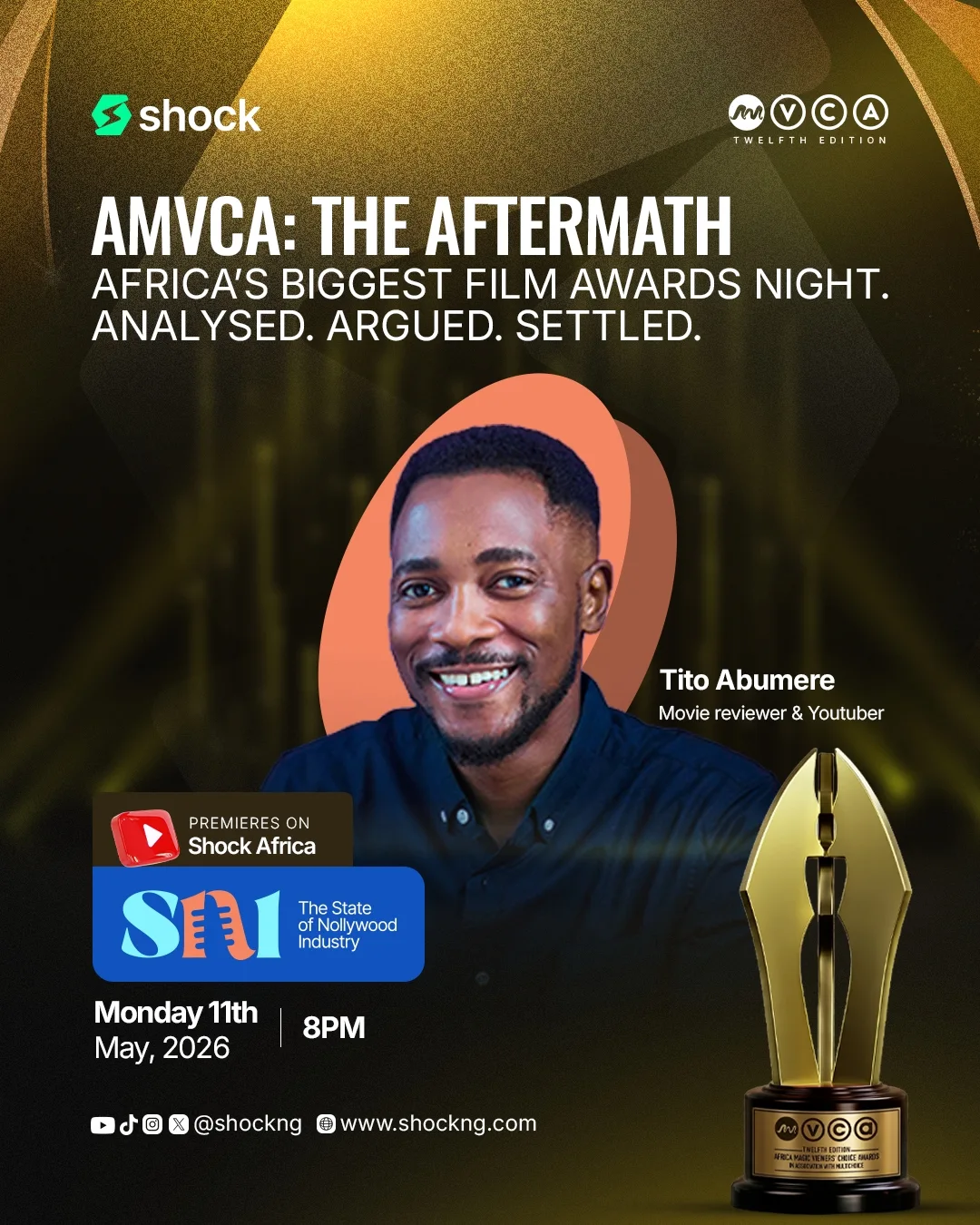
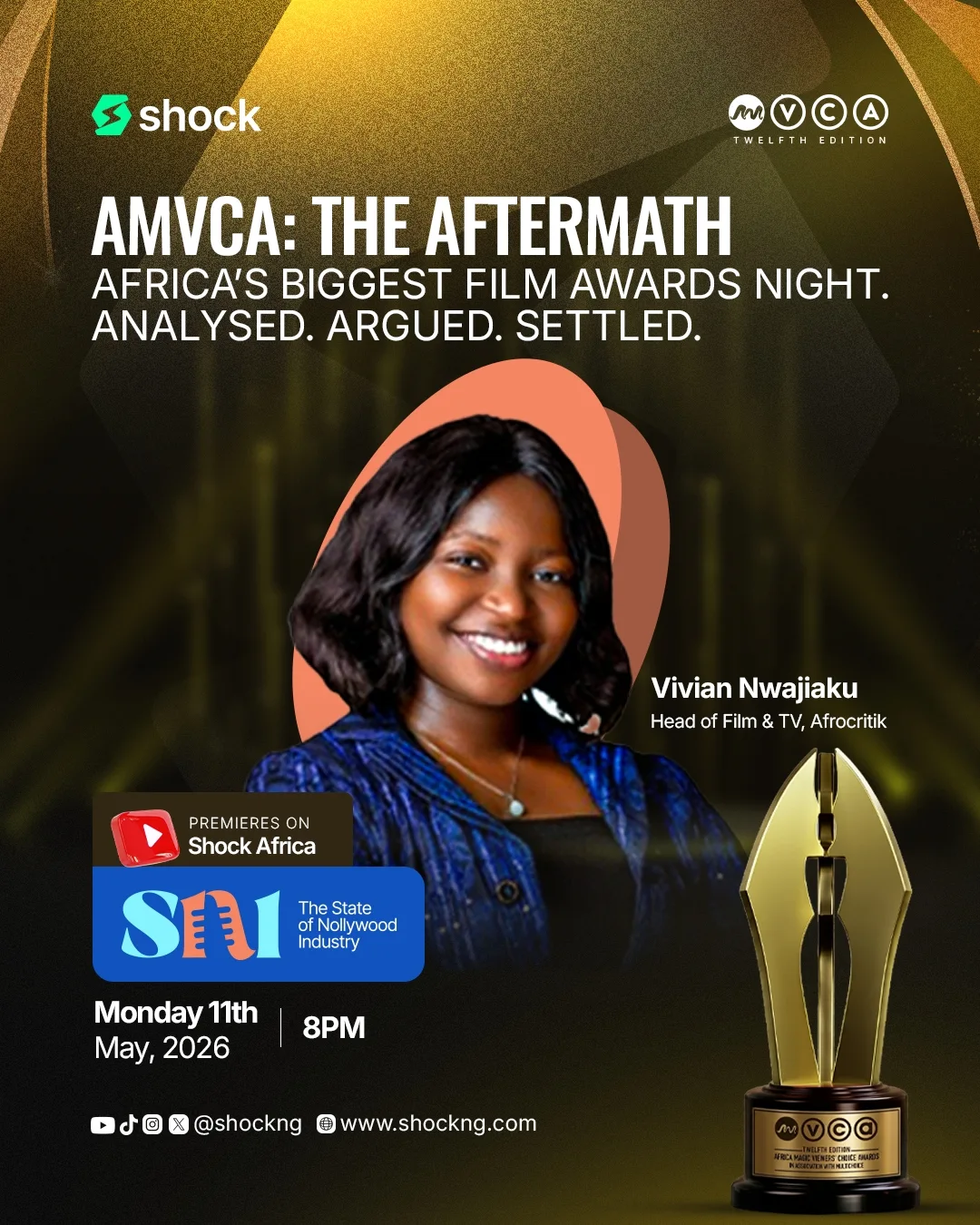
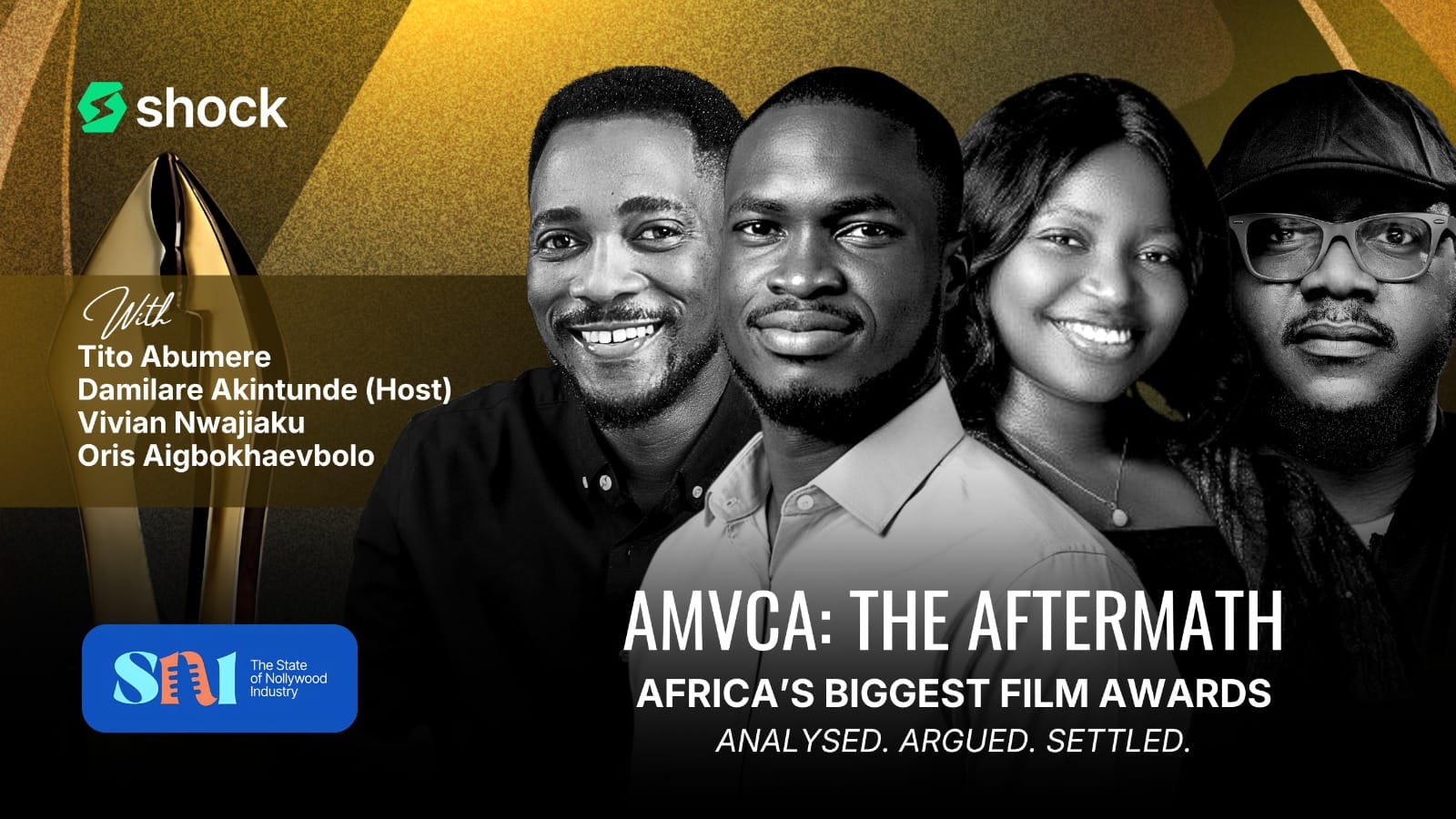
In the AMVCA aftermath episode, host Damilare Akintunde was joined by Vivian Nwajiaku (Head of Film & TV, Afrocritik), Oris Aigbokhaevbolo (Film Journalist and Founder, Film Efiko), and Tito Abumere (Movie Reviewer and YouTuber). The panel broke down the major wins, snubs, and systemic issues from the 2026 ceremony. Here are seven important insights that emerged:
1. Co-Productions and Level Playing Field
AMVCA 12 exposed a structural gap in how African film awards handle international co-productions. My Father’s Shadow, a UK-Nigerian co-production directed by Akinola Davies Jr., represented the UK at the Oscars, won a BAFTA for Outstanding Debut, and secured strong international festival attention before dominating at AMVCA with five major wins. Panellists described the contest as uneven when such a film competes directly against purely local Nigerian productions with more limited resources. The consensus was that AMVCA needs a clear policy on co-productions, possibly a dedicated category, before the next cycle.
2. Accuracy of Nollywood’s Historical Record
The Herd is regarded by some panellists as one of the top 20 Nollywood films of the last 15 years. Yet it left AMVCA 12 without a major win. Panellists warned that when future researchers or audiences look at this era of Nollywood through its biggest awards record, the picture will be incomplete and potentially misleading. Strong local films risk being overshadowed in the official history by better-resourced co-productions.
3. Need for Clear and Public Rules
The panel highlighted a long-standing industry observation: AMVCA eligibility and voting rules are not clearly published or transparent. Questions around categories such as Trailblazer, what qualifies a film as indigenous, and the exact judging criteria remain unclear. Without public rules, every controversial decision continues to be debated without a shared reference point, reducing trust in the process.
4. AI In Production And Awards Guidelines
Colours of Fire, which won Best Art Direction, is believed to be among the first Nigerian films to use AI at scale in production. The panel noted that AMVCA, like other major awards bodies, now requires an explicit policy on AI-assisted work in categories such as art direction, visual effects, and design. The technology is advancing faster than the awards’ guidelines.
5. Box Office Performance and Awards Recognition
Films such as Gingerrr (which received nine nominations but zero wins), along with other box office performers, were largely shut out of major awards. The panel argued that this is not simply a matter of audience taste versus critical preference. Filmmakers producing substantive work often under-invest in marketing and audience outreach. A strong film does not sell itself, and this gap contributes to the disconnect between commercial success and awards recognition.
6. Roles and Opportunities for Actors
Uzor Arukwe’s win for Best Lead Actor in Colours of Fire sparked discussion beyond whether the performance deserved the award. Panellists noted that while the recognition is valuable, the industry must offer actors like Arukwe more varied roles afterwards. Winning a dramatic award carries less long-term weight if the actor is quickly returned to familiar comic or villain roles that limit range and growth.
7. Effectiveness of the Indigenous Language Category
The Best Indigenous Film category at AMVCA 12 once again raised concerns. Panellists questioned whether it consistently features films that would not meet the standard in other competitive sections. Instead of protecting and elevating indigenous language cinema, the category may be legitimising weaker entries. The panel agreed that a reform conversation is overdue if the category is to represent genuine excellence.
Watch Full Episode Here
In Summary
This Shock Africa discussion goes beyond listing winners and snubs to examine the structural challenges facing AMVCA and Nollywood. The seven points offer clear areas for improvement that could strengthen both the awards and the broader industry in the coming years.
Thanks for Reading.
Shockng.com covers the big creators and players in the African film/TV industry and how they do business.
Let’s be friends on Instagram @Shockafrica