Hey, Industry Friends and Nollywood Lovers, Welcome to a new month of June!
A lot has been going on in the ecosystem, and after a brief step away, Nollywood Watch Weekly is officially back to kick off the Second Half of 2026.
The last weekend of May has unexpectedly turned into one of Nollywood’s fiercest theatrical battlegrounds in recent memory. For years, the industry reserved its biggest commercial swings for the December holiday corridor, but 2026 is already rewriting that playbook. Filmmakers are now aggressively targeting the summer window, betting on stronger cinema habits and on younger audiences willing to show up beyond festive periods. It is a strong sign that the line-up of cinema titles is getting longer by the day, but it also means exhibitors are about to make decisions around screen allocation, showtime slots, and demand economics.

5 Major Business Headlines to Know
1. BRS Splits as Odeh Allegedly Misappropriates Investor Funds
In the biggest executive shakeup of the quarter, the prominent film group BRS has officially fractured following serious allegations of financial misconduct. Sources indicate that the partnership dissolved rapidly after Odeh allegedly misappropriated substantial investor funds meant for active production slates. The split sends shockwaves through Nollywood’s independent financing circles, raising critical questions about equity structures, fund management transparency, and the legal guardrails protecting external film investors. So far, BRS announced a 3-picture slate with only 1 picture produced and the other in post-production.
2. Can Inkblot Be Great Again?
Inkblot Productions’ solo theatrical experiment is producing uncomfortable numbers.
Okanjuwa opened fourth on the weekend of May 22 to 24 with ₦13.2M — unable to crack the top three against holdovers Call of My Life, Michael, and Mortal Kombat 2. By the following weekend, it had dropped to eighth place, earning just ₦6M. That is a 54.5% week on week decline and a fall of four positions on the chart.
The more pointed detail: Okanjuwa was outperformed in both weekends by The Boy Who Gave — a lower budget, character driven film that arrived with minimal star power and muted critical expectations. The Boy Who Gave earned ₦10.4M in its second weekend and ₦10.2M in its third, showing the kind of consistency Okanjuwa could not sustain even in its opening weekend. By week two, Okanjuwa‘s ₦6M placed it below two films — Star Wars: The Mandalorian & Grogu and Passenger — that only debuted the previous weekend.
The numbers tell a consistent story. Without the multi-studio backing and collaborative infrastructure that defined Inkblot’s peak co-production era, its independent releases are losing momentum precisely when they need it most. A premium cast cannot substitute for story. Marketing spend cannot manufacture staying power.
Industry conversation has begun to consolidate around a straightforward question: is the studio’s current go-it-alone pipeline a strategic evolution, or a costly detour from a model that actually worked?
The co-production years put Inkblot in the record books. The solo years have not.
Perhaps the path back to commercial relevance may run through the same collaborative table the studio walked away from.
3. All About Cannes: Clarissa and AFRIFF Command Global Attention on the Croisette
The just-concluded 79th Cannes Film Festival proved that Nollywood’s international prestige is hitting a brand-new gear.
Arie and Chuko Esiri took center stage at the festival with their highly anticipated sophomore feature, Clarissa, an elegant, Lagos-set reimagining of Virginia Woolf’s literature that screened during the prestigious Directors’ Fortnight section. Boasting a heavy global cast including Sophie Okonedo and Ayo Edebiri, the film arrived with immediate distribution backing from NEON. On the business side of the festival, AFRIFF represented Lagos beautifully by participating in the official Goes to Cannes initiative at the Marché du Film, allowing native producers to pitch high-value works-in-progress directly to international sales agents and programmers who are eager to unlock West African audiences.
4. Bolanle Austen-Peters Teases Cybersecurity Drama Wire Wire as Grand Theatrical Return
The newly released trailer for Bolanle Austen-Peters’ Wire Wire immediately sparked online discussion because of its sharp pivot into cybercrime and digital surveillance territory. The project officially marks her highly anticipated return to theatrical cinema screens. While the teaser has generated massive industry buzz, Austen-Peters has noticeably not yet named an official theatrical distributor for the release.
This strategic theatrical return follows the incredible momentum of her last two major projects spanning both delivery formats. Her last theatrical outing, the critically acclaimed biopic Funmilayo Ransome-Kuti, set major box office benchmarks for independent historical features, while her immediate follow-up project, the epic drama House of Ga’a, achieved dominant streaming success as a domestic global chart-topper on Netflix. By moving from historical epics to contemporary digital fraud, Wire Wire signals that the director is eager to capture younger Gen-Z audiences who consume high-octane global thrillers regularly.
5. Genevieve Nnaji To Star in New BBC Series and Gets Women in Film Honor
Nollywood icon Genevieve Nnaji is making a major global return to the screen after an eight-year acting hiatus. She has officially joined the cast of the upcoming BBC Studios six-part thriller series Wahala, which is an adaptation of the celebrated novel by Nikki May. This major casting announcement coincided with her high-profile appearance at the Cannes Film Festival, where she was celebrated as an honoree at the Red Sea Film Foundation’s Women in Cinema Gala. Speaking at the festival, Nnaji emphasized the urgent need for structural distribution networks that bring authentic African stories directly to international markets rather than treating the continent as a regional curiosity.
Shock Africa Drops Essential AMVCA 2026 Post-Awards Analysis
The 12th Africa Magic Viewers’ Choice Awards have officially wrapped, leaving the industry divided over massive surprise wins and unexpected technical category snubs. To help make sense of the chaotic night, Shock Africa has just released its definitive post-awards industry video breakdown titled AMVCA 2026: The Aftermath.
The comprehensive review features heavy industry analysis from top film critics like Vivian Nwajiaku and Oris Aigbokhaevbolo, who examine My Father’s Shadow sweeping five major wins, the shocking shutout of nine-time nominees Gingerrr and The Herd, and the controversial voting patterns across the major acting categories.
Where to Watch: The full panel discussion is streaming right now exclusively on the official Shock Africa YouTube channel.
By The Numbers
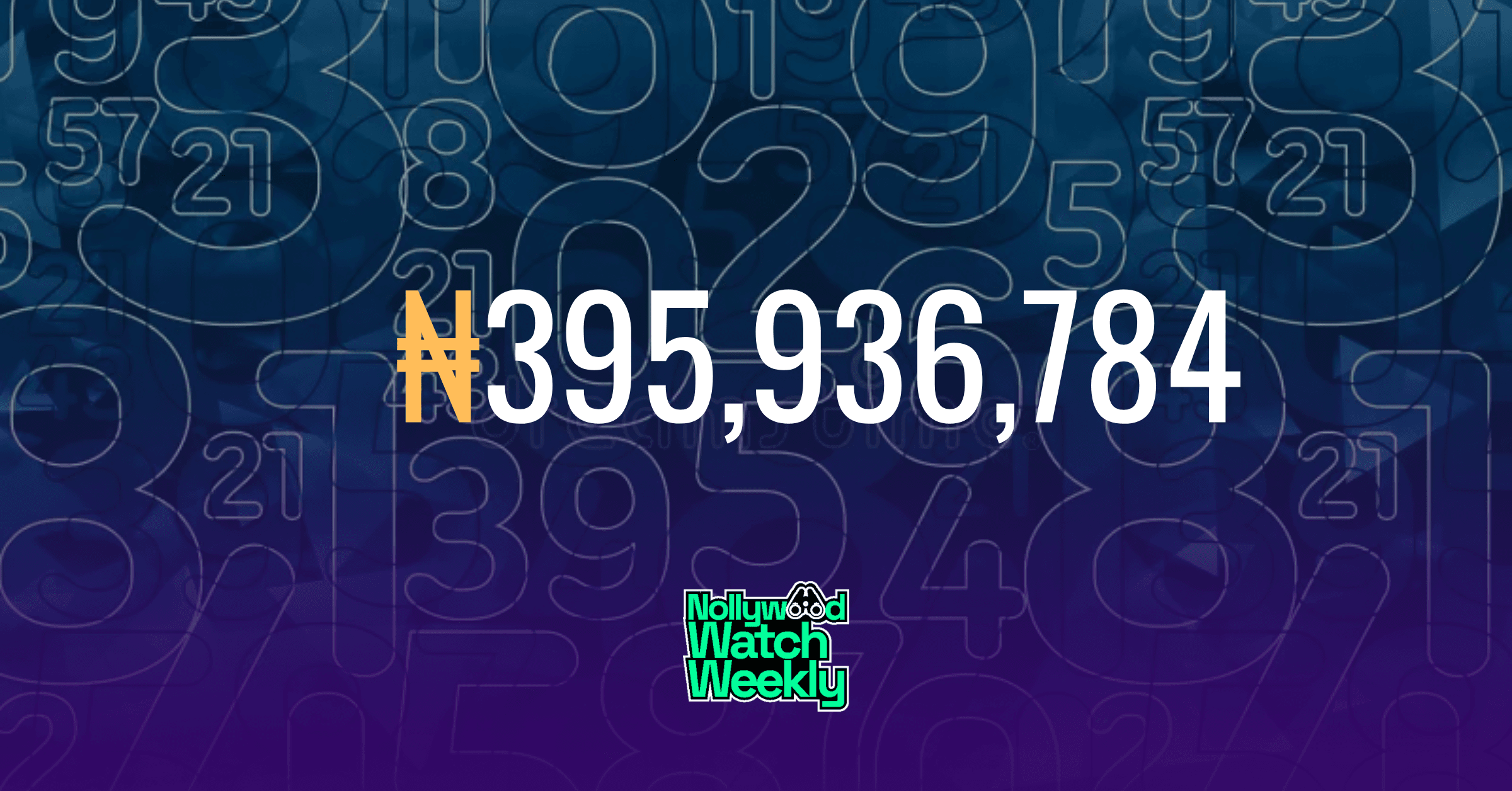
Call of My Life has officially crossed a monumental ₦395 million cumulative gross at the domestic box office. Directed by Dammy Twitch, written by and starring Uzoamaka Power, and produced by Blessing Uzzi for Blu House Studios, the romantic comedy hit this triple-century milestone by defying standard theatrical drop-offs through chemistry marketing, powerful association from music stars and immense word of mouth. Clearing this massive benchmark outside the traditional Valentine’s February window proves that strong counter-programming can capture massive cinema market share when execution aligns with audience demand.
Reaction Radar
The Showtime Crunch: First-Time Filmmakers Cry Foul Over Big Screen Allocation
The commercial friction in theaters has intensified as a powerful coalition of independent indigenous producers has taken to social media to cry out over unfair box office showtimes. Prominent filmmakers Fathia Balogun, Jaiyeola Monje, and Funmilayo Mary have openly confronted cinema programmers over what they describe as systematic exhibition bias. The producers allege that despite pulling steady, dedicated audiences, their culturally rooted native titles are being aggressively choked out of premium afternoon and evening showtimes to protect underperforming Hollywood imports and studio-backed releases.
This public pushback has struck a major nerve across the industry. Independent trackers note that local exhibitors are severely cutting back opening frame allocations for native language projects, creating an artificial barrier that prevents independent titles from scaling their cumulative grosses. As independent filmmakers increasingly rely on opening week velocity to survive, this unified public outcry signals a growing refusal among indigenous creators to let corporate theatrical distribution choke out authentic grassroots cinema.
Marketing Ad of the Week: The Call of My Life Cinema Activation Featuring Chike
The promotional machinery behind Call of My Life provided a masterclass in experiential marketing this last week.
The activation timing was visually flawless. Chike has recently been at the absolute centre of a massive, viral internet search surge due to his highly publicized affair scandal involving television host Frank Edoho and his wife. Capitalising on this roaring wave of public fascination, the COML team may have pushed through a real-time meet and greet for movie consumers that ended up a major point in its rollout timeline.
By having the heavily trending artist show up to watch the romantic comedy alongside everyday filmgoers, the campaign generated instant, organic video content that flooded TikTok and Instagram. This strategic fusion of real-world pop culture scandal, star power, and real-time fan interaction gave an immense PR lift to Call of My Life, driving an undeniable fear of missing out among audiences and proving that there may be a PR finesse for converting online lifestyle gossip into actual theatre ticket sales.
What I’m Watching: Iseda TV’s Hannah and the Monetisation of Modern Faith Slates
While mainstream headlines focus heavily on theatrical distribution, a quiet revolution is taking place on YouTube. This week, Iseda TV’s latest feature film, Hannah, starring Teniola Aladese and Ibrahim Chatta, instantly captured digital audiences by racking up millions of views within days of release. More than just a viral hit, Hannah highlights Iseda TV’s distinct production strategy, which involves building an entire content pipeline dedicated exclusively to reinterpreting biblical and faith narratives for modern audiences. By combining premium Nollywood production values with the accessibility of YouTube, the studio has cracked open a highly lucrative, built-in audience demographic that traditional streamers and cinema chains frequently overlook.

New June Titles Coming to the Big Screen
As the industry waves goodbye to May’s brutal cinematic showdown, exhibitors are rapidly preparing for a highly anticipated wave of fresh June titles operating on vastly different operational grounds. The incoming mid-year slate features major premium offerings that include a Nollywood and Bollywood romance match, a film about generational family dynamics, another about good and evil and then a prison set picture.
GLOBAL SPOTLIGHT
Saudi Arabia Disrupts Global Production Landscape with 60% Cannes Film Rebate
In a move that completely dominated business conversations at the Cannes Film Festival, the Saudi Film Commission officially announced a massive increase in its international production cash rebate, raising it from 40% to an unprecedented 60% of eligible local spending. This policy update immediately positions Saudi Arabia as one of the most financially aggressive and competitive filming hubs in the global screen economy. Introduced during the Marché du Film by Saudi Film Commission Chief Executive Officer Abdullah bin Nasser Al Qahtani, the revised incentive package focuses heavily on structural speed, promising accelerated disbursement procedures and integrated financing solutions through the Kingdom’s Cultural Development Fund to give international studios maximum cash flow certainty.
Close off
Kayode Kasum’s Ajosepo 2: The Gathering enters cinemas carrying the weight of audience familiarity and commercial expectation. The original film built its success on ensemble chaos, wedding drama, meme-worthy comedy, and highly recognizable stars, so the sequel is leaning heavily into the same formula. With Timini Egbuson leading the charge, the movie is clearly designed as a crowd-pleasing commercial machine capable of driving repeat viewings and social media conversation throughout the weekend.
On the opposite end sits Iyaloja, a more locally grounded charged drama built around power, survival, and market control. The casting alone immediately signals prestige and intensity. Kehinde Bankole, Iyabo Ojo, and Wale Ojo bring heavyweight dramatic credibility, while the film’s visual campaign positions it as a culturally rooted blockbuster rather than a soft arthouse release.
The problem for both films is timing. Releasing two large-scale Nigerian titles on the same weekend means they are inevitably fighting for identical cinema slots, premium evening screenings, and opening weekend attention. They now face immediate May holdover competition from Call of My Life, Michael, and Mortal Kombat.

Do not miss a single industry beat. Nollywood Watch Weekly officially drops every single Tuesday and Saturday at exactly 2:00 pm, straight to your inbox.
Before you close out, we need your help to expand our community footprint across multiple channels. Head over to our main social pages right now: follow Shock NG on Instagram to help us cross our major 10,000 followers milestone this month, and make sure to connect with us on LinkedIn to get more industry updates across the week
See You On The Next One!