The Story⚡
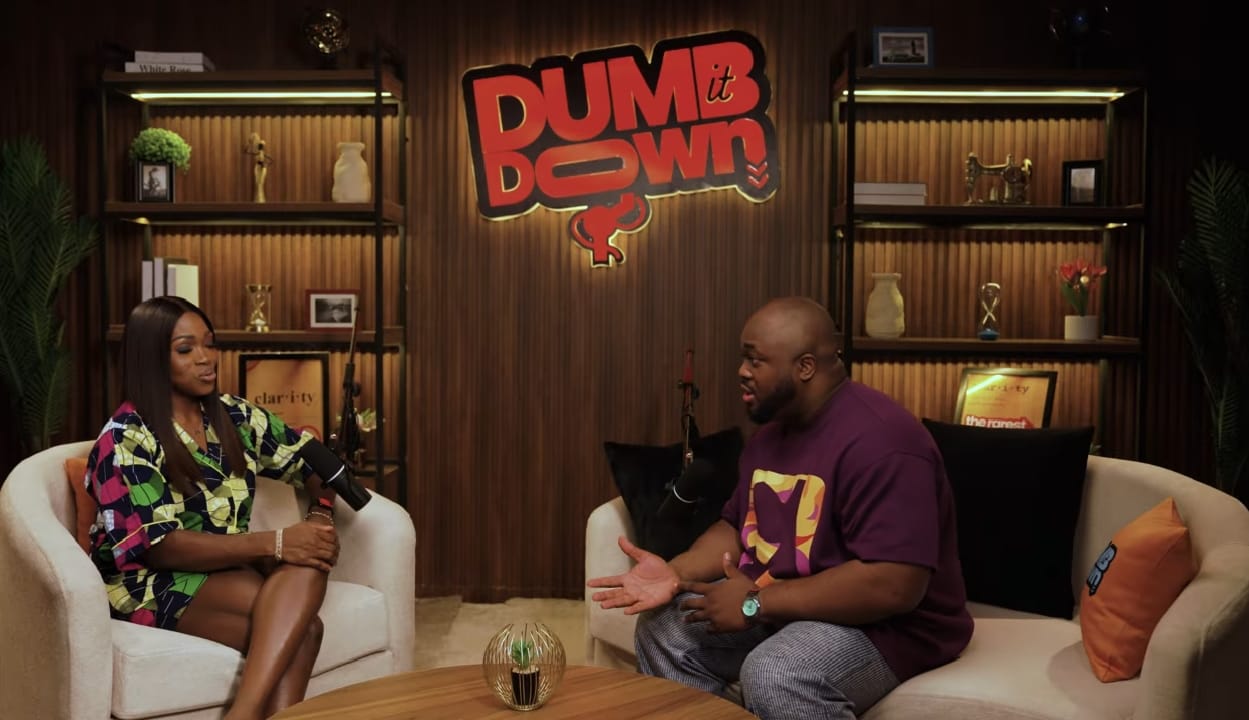
Everyone carries a camera. Few create films that people pay millions to keep. In Dumb It Down episode 6, Ibidunni Damilola shows how love stories became a studio that sells feeling, not footage.
Tell Me More
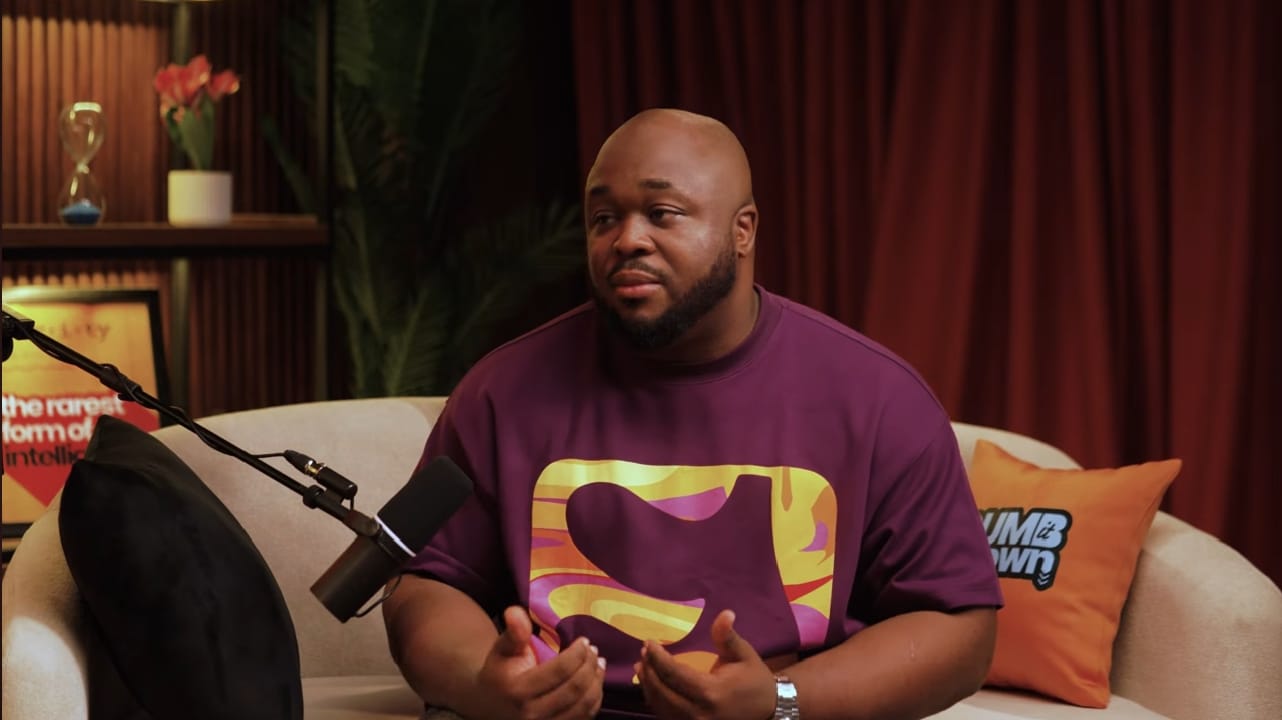
In the sixth episode of Dumb It Down, host Abimbola Craig sits with Ibidunni Damilola, founder and Creative Director of Ibidunni Damilola Studios. The conversation moves past the finished films viewers see online and into the quiet decisions that turned a young writer with a camera into the person behind Nuptial Symphony, Glam X, and Explore and Film. Damilola, who prefers the title visual entrepreneur over storyteller or photographer, walks through the path that began with Indian movies, a university gap year, and a deliberate choice to create value first.
From Lyrics to Lens
Growing up, Damilola’s father brought home Indian films: Sholay, Akbar, and Anthony. He would write down the song lyrics as a way of engaging with the stories. That early fascination with cinema stayed with him. During a gap year at university, while studying scriptwriting, he encountered terms he did not fully understand. He turned to YouTube to learn the practical side of filmmaking. Travel films came first, then hospitality and food films, then fashion films. Fashion offered an entry point with less competition at the time, giving him space to develop a distinct approach rather than compete in already crowded fields like music videos.
He never set out to build a money-making machine. “The goal was to create value,” he told Craig. “If you create value, you make money.” He turned down a job his mother secured for him at Deloitte, choosing instead to follow the craft. His parents, after initial hesitation, allowed him the room to try. He describes himself as self-taught, learning frame rates, shots, and techniques on YouTube, then practising them in real locations. His first proper paid job, a restaurant film in Victoria Island, brought in 120,000 naira at a time when his salary was around 30,000. He slept on the news before checking again, just to be sure the money was real.
What a Wedding Film Actually Sells
Damilola is clear about the product. People do not pay for the footage alone. They pay for the way the film makes them feel, much like someone buys a Birkin for the value it confers rather than its ability to carry items. The perception that accompanies one of his films is that the client has paid well. That perception is intentional. He aims to create abnormal demand by delivering something that stands apart from point-and-shoot coverage.
The studio’s offerings reflect that thinking. Nuptial Symphony grew from an accidental path into wedding work. After initially declining wedding jobs, a request from a friend’s friend led him to treat a wedding as a fashion film. The result introduced a cinematic approach centred on the couple and bridal party, blending love and fashion into a single narrative. Glam X emerged later, inspired by glam bots but reinvented as fashion films of guests at events. Packages are structured around the number of guests, 20, 30 or 40, with corresponding numbers of short films. Prices for these range from about 1.5 million to 4.5 million naira, depending on the scale. Explore and Film extends the work into travel and lifestyle.
The Invisible Work and the Trap of Exposure
Behind a single wedding film sits a full workflow that remains largely unseen: preparation, direction, controlled environments where possible, spontaneous capture where necessary, and careful post-production that shapes emotion through image and sound. Damilola stresses that the market does not set his prices. His own work and the service he delivers do. He is not in the business of chasing numbers of followers or comments. He is in the service business. At the same time, he is careful not to price himself out of reach; his background in economics helps him balance supply and demand.
On the subject of exposure, his view is measured. Exposure has paid some of his bills. Yet he treats pure exposure offers with caution, especially for younger creatives who may undervalue their time and skill. The conversation returns repeatedly to the idea that value comes first. Money follows when the work itself creates demand that cannot be easily replicated by a phone camera.
Building From One Camera to Several Brands
What began as a one-man effort has grown into a studio with multiple products and a team. Damilola moves between weddings, fashion, events, red carpets (including recent AMVCA coverage), and longer-form work. He describes himself as a vessel open to whatever direction the work takes next. The through-line remains consistent: create films that leave people feeling they have received something substantial.
Watch Full Interview Here
In Summary
Ibidunni Damilola’s account is less a success story than a working method. Value first. Learn by doing. Price the feeling, not the frame. The full conversation reveals how those choices turned personal films into a studio with several names.

Thanks for Reading.
Shockng.com covers the big creators and players in the African film/TV industry and how they do business.
Let’s be friends on Instagram @Shockng